
Transcript reuse
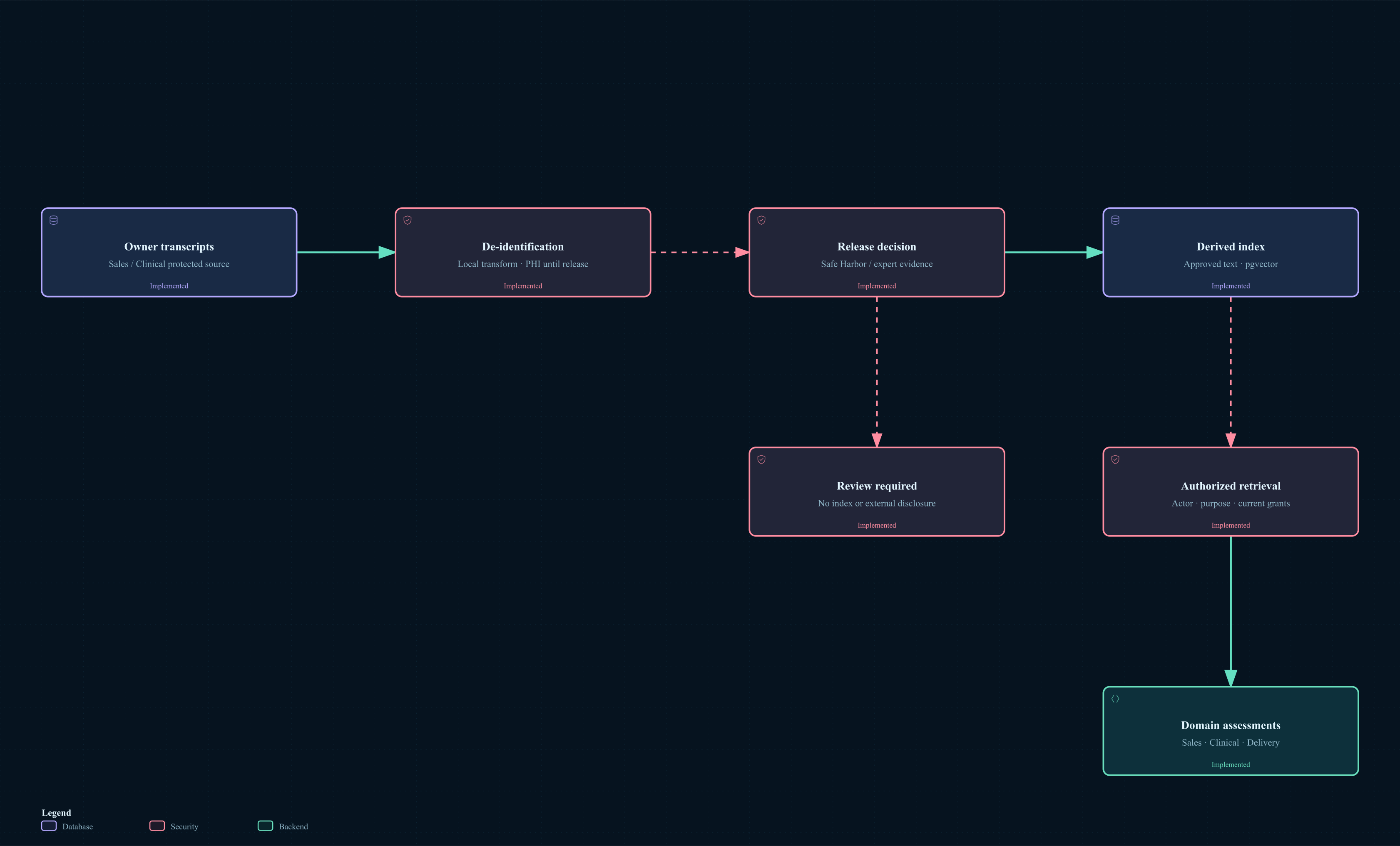
Owner-controlled evidence, HIPAA de-identification review, shared semantic search and separate Sales, Clinical and Delivery assessments. Recipient activation requires approval.
The Fitness Doctor
Learn how the TFD backoffice works, which context owns each responsibility, and where to start in the code. Follow the onboarding path first, then use the diagram categories as a reference for your task.
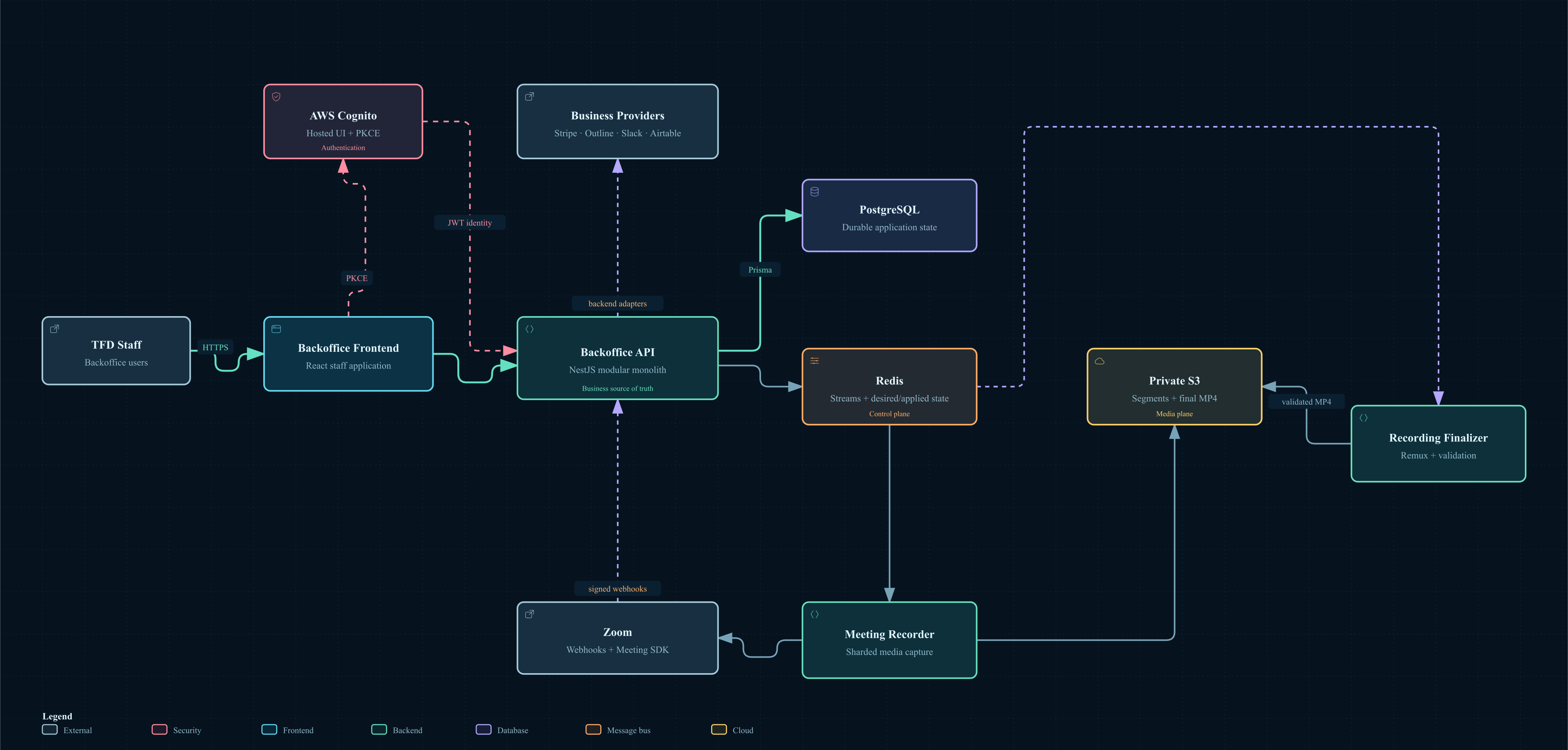
TFD centralizes internal staff operations: client profiles, program delivery, attendance, and follow-ups. The backend is a modular monolith: business contexts have explicit boundaries inside one application. Media workers run separately for specialized processing.
docs/architecture/system-architecture/ONBOARDING.md for setup links,
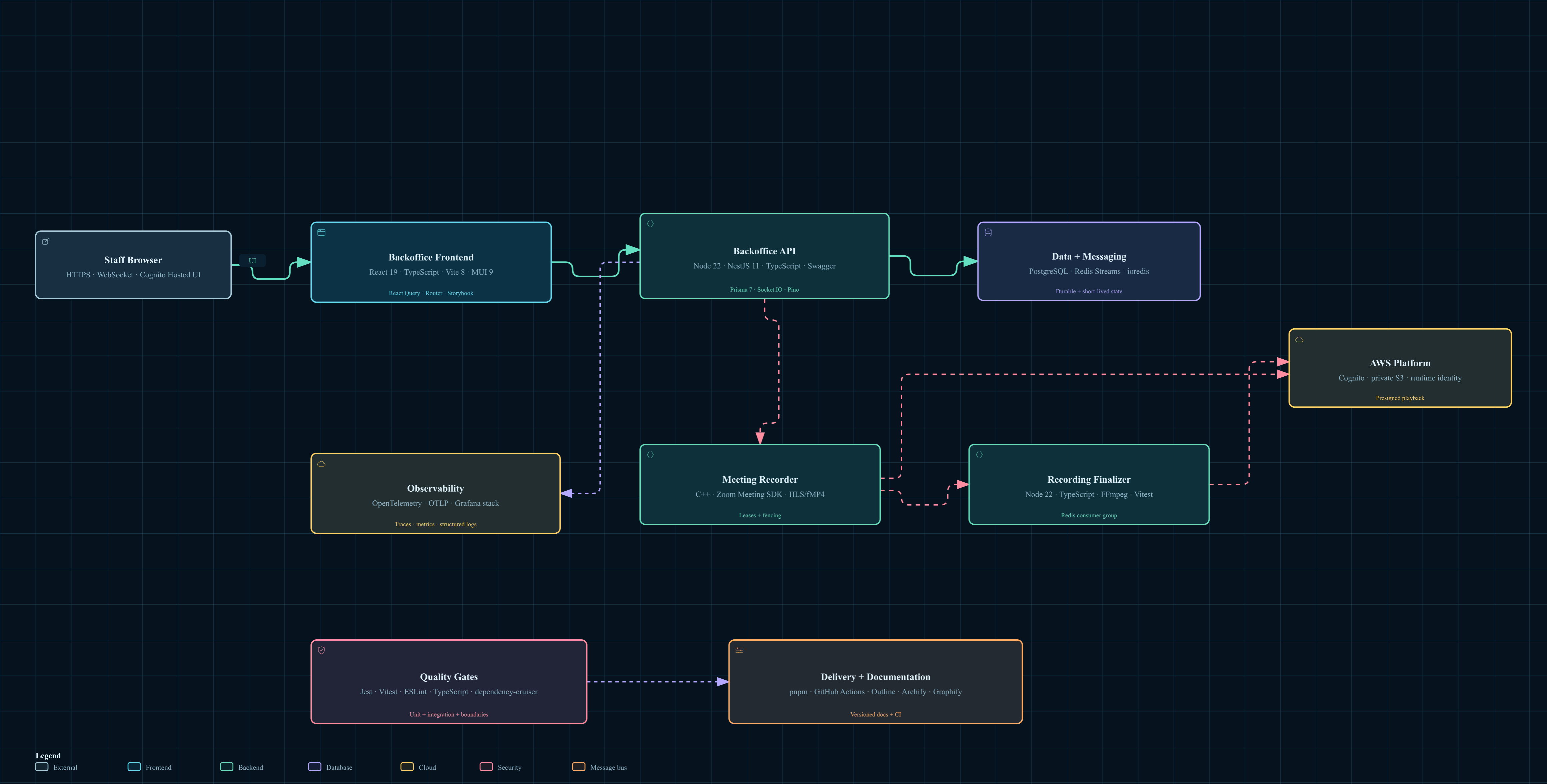
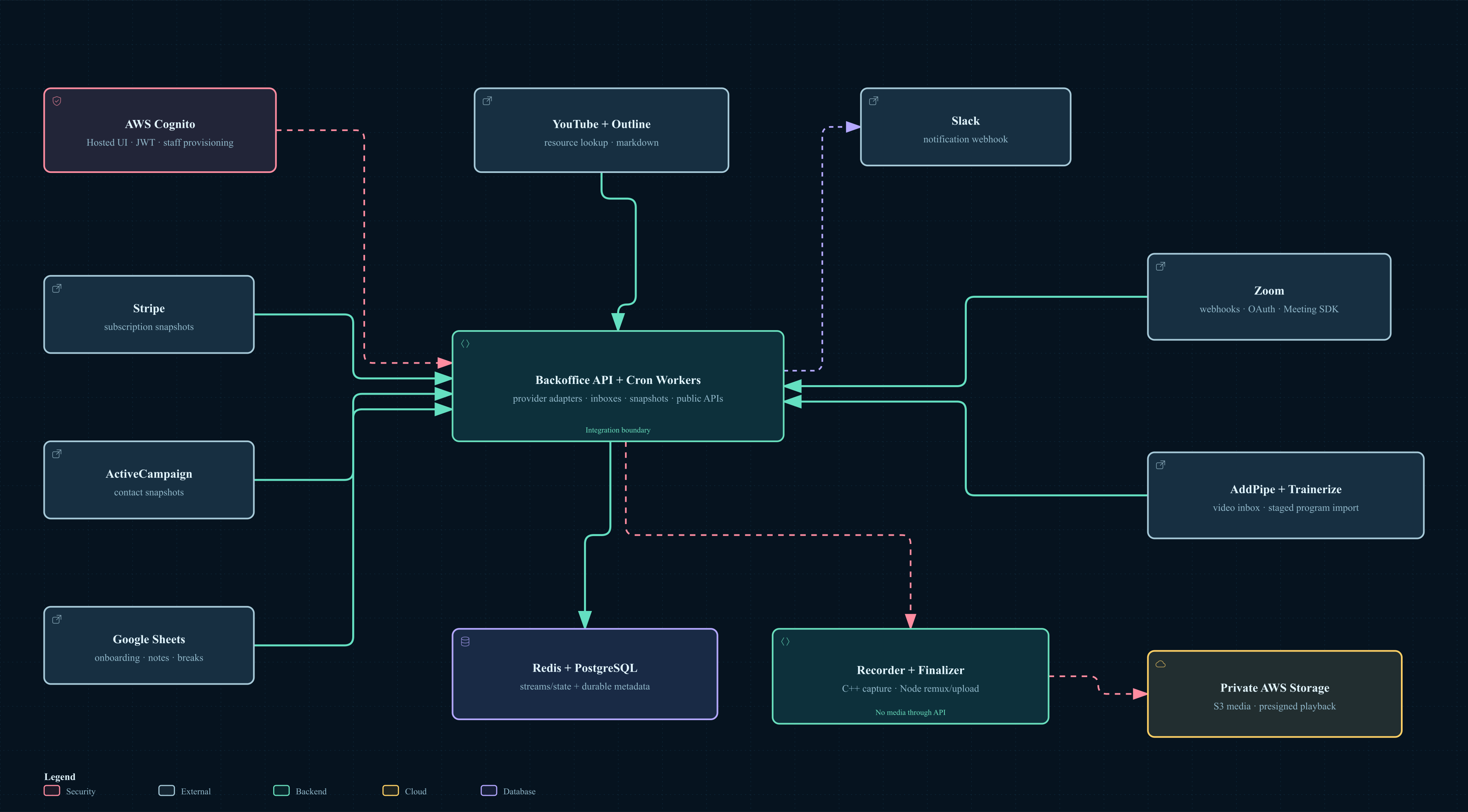
code entry points, a worked event trace, and checks for your first change.Use guided chapters where available, then click a node to inspect its details. Read arrow labels and each diagram's legend. Planned or conceptual labels describe intended design, not proof of working code; check the linked source and tests.
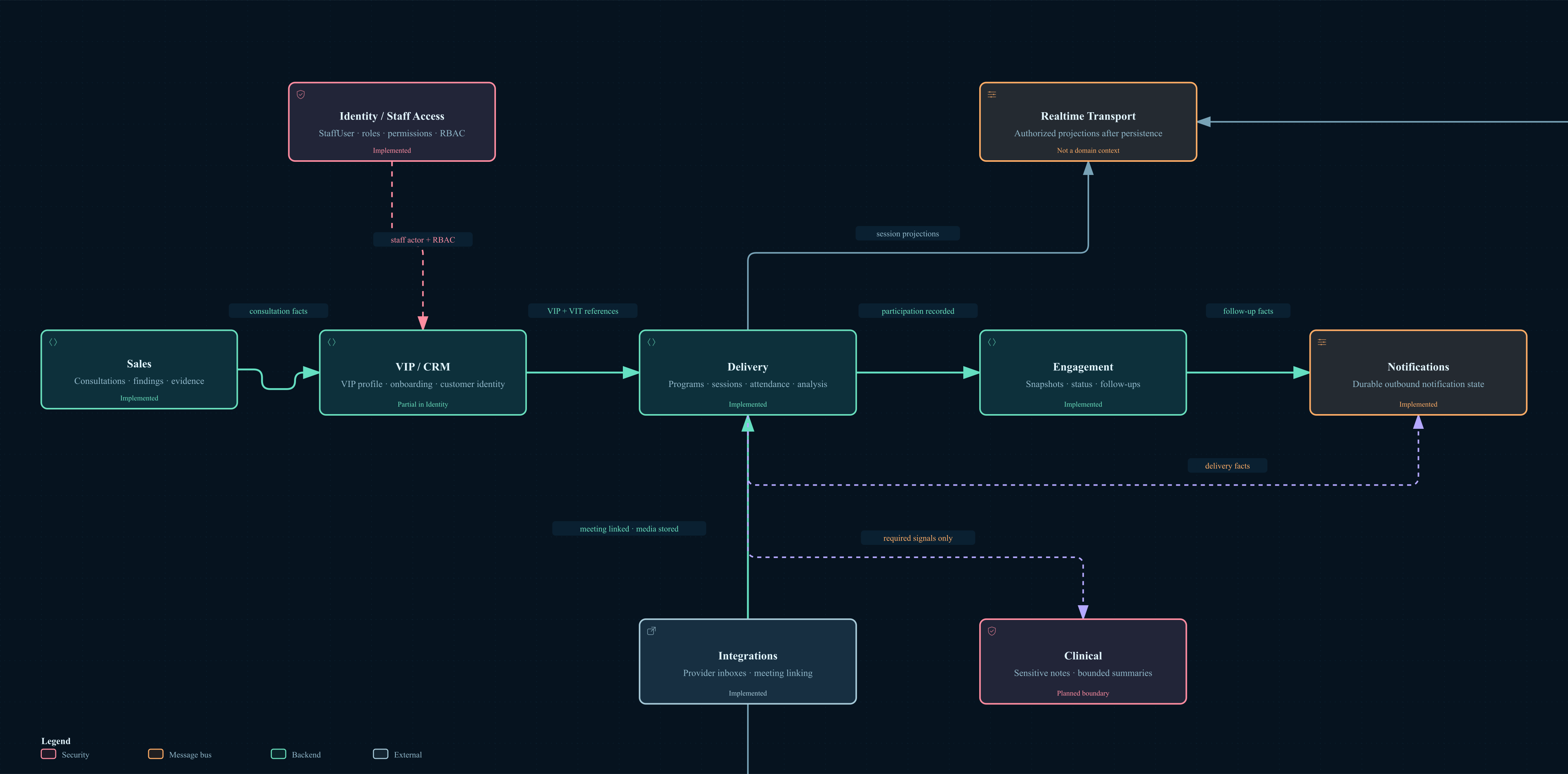
A business journey can cross several contexts and still be context-related. A cross-cutting flow explains a mechanism reused by many journeys.
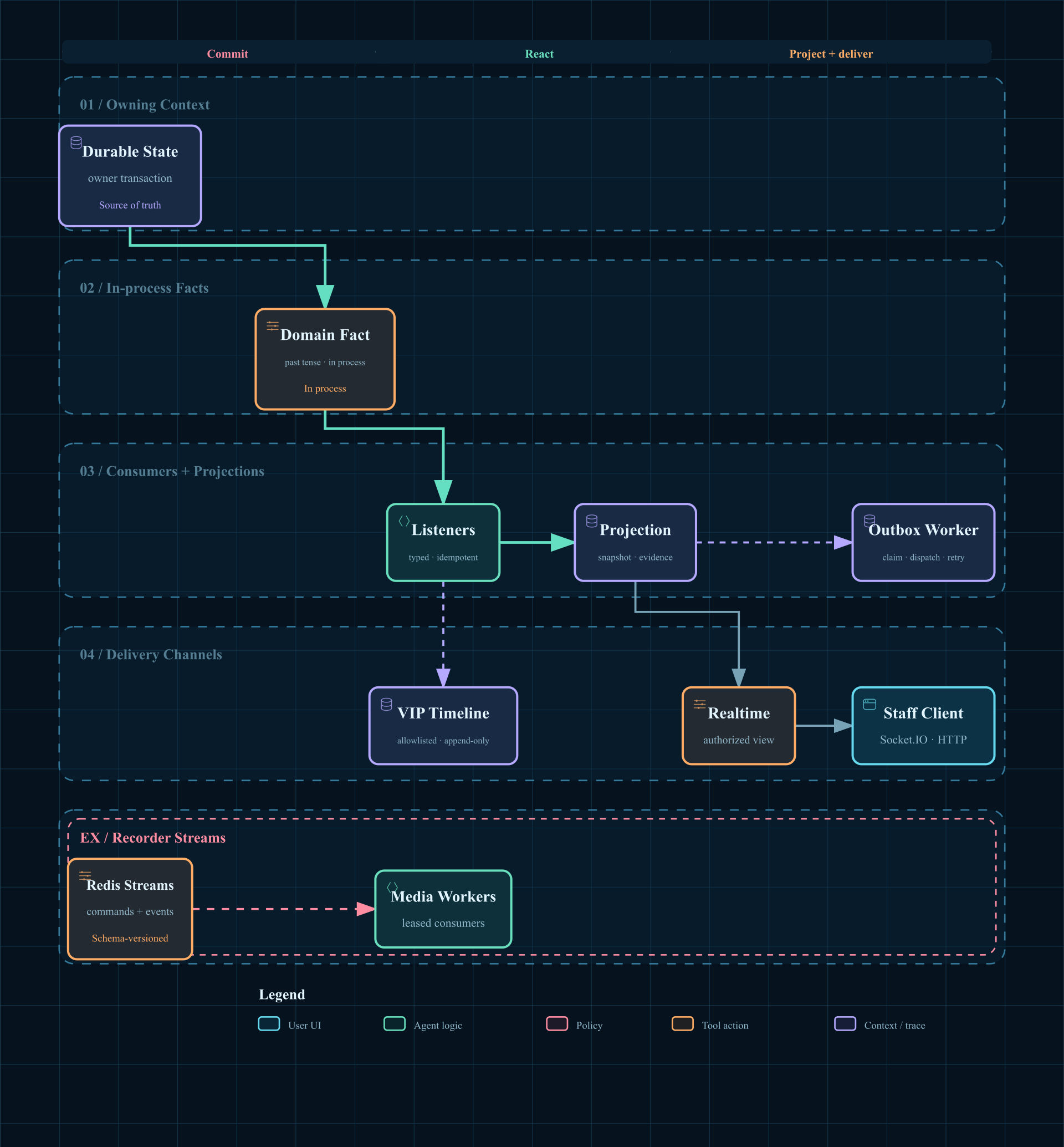
Events inside the monolith are best effort across process termination. Durable media queues have their own recovery rules. Do not assume every arrow guarantees delivery.
Shared patterns that apply across business contexts. Start here to understand how changes propagate through the platform.
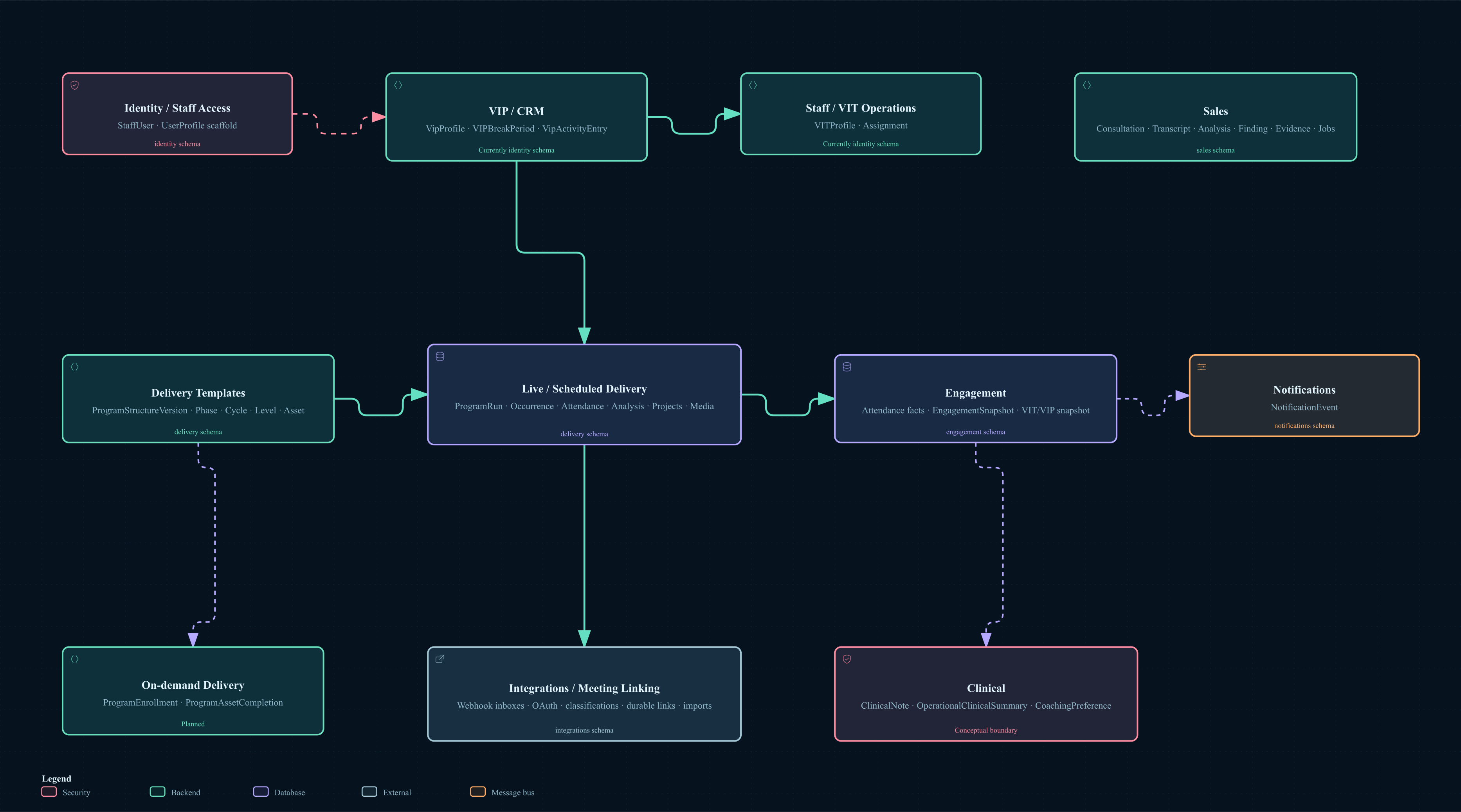
Business ownership, domain entities, and journeys within and between named contexts such as Sales, Delivery, Engagement, and Clinical.
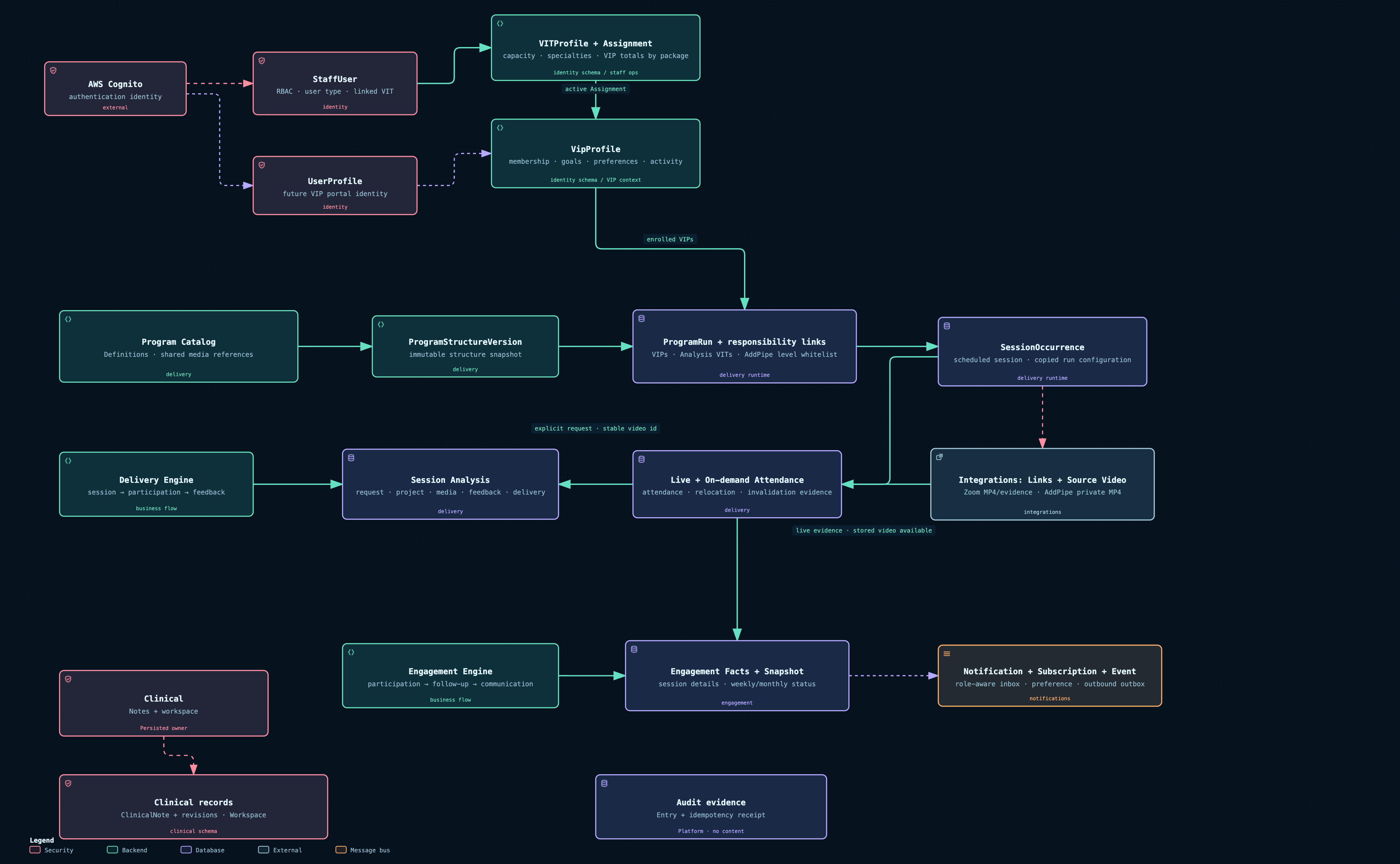
The runtime, technologies, and external services that support the business contexts.